Falar
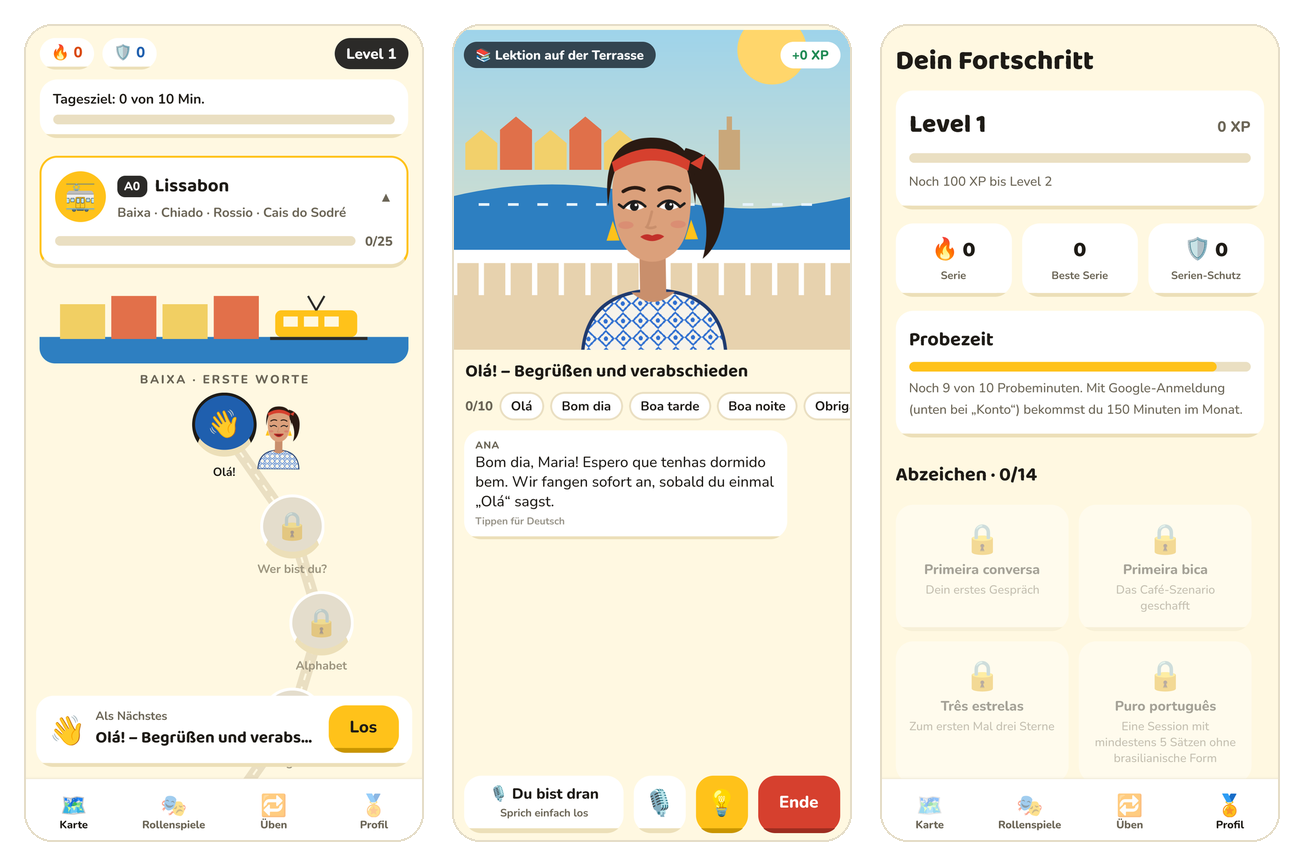
A speaking tutor for European Portuguese. You talk to Ana, a teacher from Lisbon. She answers out loud, corrects you, and builds the next lesson around the mistakes you keep making. A course from A0 to B2 as a journey through Portugal, role plays from everyday life, and spaced review of your own errors.
Released to internal testing on Google Play on 1 October 2026; two testers so far, the closed test with outside testers is next, billing after that. The repository is private. The article My server pays for a voice AI call it never hears walks through the security design.
Architecture
Phone (Expo)  ──SDP offer──▶  Django backend  ──API key, session config──▶  OpenAI Realtime
     ▲                              │  ▲                                          │
     │                              │  └──────── sideband WebSocket (guard) ──────┤
     └───────────── audio + data channel, direct (WebRTC) ────────────────────────┘
Phone  ──exchange text──▶  backend  ──▶  text model (strict JSON)  ──▶  mistakes, vocabulary
Speech to speech, directly between phone and model: about one second per turn, and the only setup in which the model hears the learner's pronunciation instead of a transcript of it. The backend never sees the audio and pays for all of it.
Trust boundaries
| Component | Trusted with | Enforced by |
|---|---|---|
| App | an app token, its own microphone | nothing it sends is believed: config, duration and prompt all come from the server |
| Call broker | creating calls with the API key | budget check before every call; one call per user (row lock, the old call is hung up) |
| Guard | ending any call | sideband connection per call: hangs up on session changes, messages the app wrote, answers ordered with foreign settings, at the time limit, and when the sideband itself fails |
| Budget | what a call costs | the server's clock (started_at, call_ended_at); orphaned calls capped at the maximum length |
| Analysis model | proposing mistakes and words | strict JSON schema, unknown IDs ignored, store=False, HMAC safety_identifier; only extracted items are saved, never the exchange |
| Google sign-in (GCP) | linking an account | ID token verified for signature, expiry, audience (web client ID) and issuer; email only if verified |
What is built
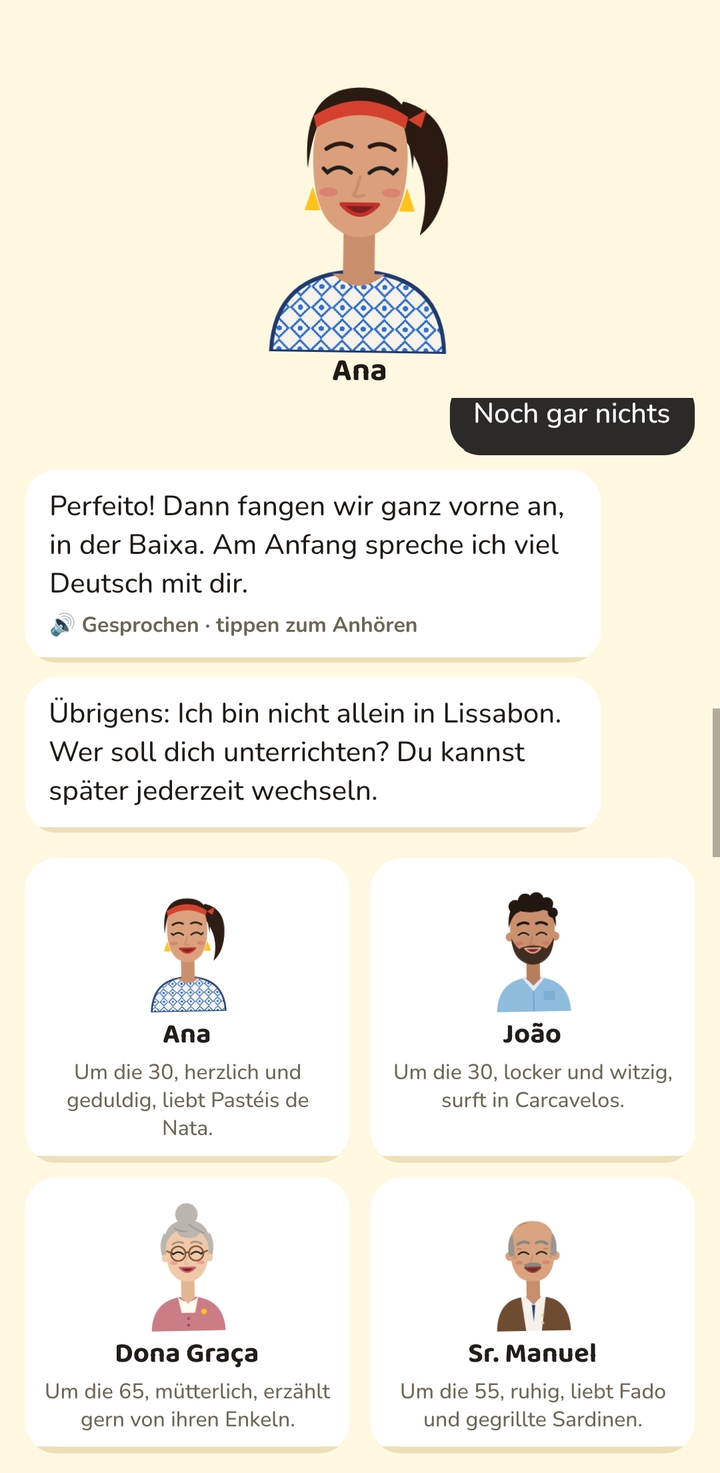
- Course: lessons per stop on a map (vocabulary, grammar, pronunciation, listening, discussion, checkpoints), role plays, a free conversation mode, four tutors with their own voice and character
- Memory: every correction becomes a review item; Ana weaves due items into later lessons, five correct uses in separate sessions count as learned
- Accounts: anonymous device account with trial minutes on first start, Google sign-in to keep progress, account deletion in the app
- Limits: per-call, daily and monthly minutes, a shared daily pool for all trial accounts, throttled account creation, an OpenAI project spend limit
- Cost: about 9.5 cents per conversation minute, measured, down from about 14 (the tutor's past answers kept as text instead of audio, shorter turns, a per-answer token cap as an emergency brake)
Delivery
- Backend: Django, PostgreSQL, Docker Compose on a Hetzner server behind nginx with HSTS, the admin behind a second password and its own rate limit; multi-stage image with a numeric non-root user; daily database backup
- CI on every pull request; deploy after green CI on the main branch, with an SSH key limited to one script by a forced command and a read-only deploy key on the server
- App: Expo with EAS, over-the-air updates after merge, store releases by tag
- 122 backend tests, including the guard against a fake sideband
- Dependabot rules matched to Expo's SDK cycle
Known gaps
- One narrow class of client request looks exactly like a legitimate turn from the sideband. Time limit, server-side budget and spend limit bound it; nothing closes it yet.
- Guards are threads in the web workers. A startup sweep and a sweeper container hang up calls whose guard died; a dedicated process would be cleaner before many concurrent calls.
- The numbers come from one week of development and internal testing.
- The app shows nothing when Google refuses a sign-in; fixed in the next update.